Psychotherapy
& other helping professions
What are 10 key facts for helping professionals?
How to help clients grow & live more meaningful, satisfying lives
Key facts and reviews by Dr Joel Vos, winner of the first international leadership award for Distinguished Contributions to Existential Therapy Research, and of the 2026 International Transactional Analysis Association Research Award
Helping professions Fact 1.
Most psychological therapies & interventions work well,
provided they rely on professional training & systemic research.
Humanistic and existential methods
that help people grow, and live meaningful, satisfying lives,
are just as effective as other approaches.

Helping professions Fact 2.
Clients work on deeper topics
in deep relationships with their therapist.
Helping professionals Fact 3.
Most clients come to a therapist or helping professional
not to get rid of a diagnosis,
but to learn to live a meaningful and fulfilling life
in spite of everything.
Helping professionals Fact 4.
Therapists & other helping professionals guide clients
from sedimented meanings and stories
back to the dynamic stream of lived experiences
from where everything originates.
Helping professionals Fact 5.
Suffering, pain and death
may not only challenge life
but may also offer opportunities to life.
Helping professionals Fact 6.
Humans waste precious life time running away
from suffering and death,
until they realize that
suffering and death are running their lives.
Embrace them, before they embrace you.
Humanistic & existential therapies Fact 7.
All of us have different parts inside ourselves,
which we could give various names such as
our inner Adult, Critical & Nurturing Parent, Adapted & Free Child.
Some parts may sometimes be more present or dominant than others,
which can be helpful and unhelpful in life,
What matters is to grow our Adult
to help us shift flexibly and balance between our parts.
Helping professions Fact 8.
Structure and practical skills
are equally important in helping professions as
freedom and abstract reflection.
Helping professions Fact 9.
Helping professional works simultaneously at three levels:
Macro-level:
follow the client's preferred goals and methods
Meso-level:
follow the agreed method to achieve the client's goals
Micro-level:
follow the client's lived experiences, meanings & values.
Helping professions Fact 10.
A bona fide helping professional starts with a bona fide assessment of the client & their social context.
Helping professions Bonus Fact.
Nothing in the helping professions is more difficult, or more essential, than helping clients take responsibility for their own life.
Helping professions Bonus Fact.
If a patient tells their medical doctor about their sore throat,
and the doctor amputes their foot,
we call this a medical error.
If a patient tells their therapist about their struggles with housing, work, and relationships, and the therapist tells they need to improve their negative thoughts or get psychiatric medication,
we should call this a psychotherapeutic error.
Why should therapies & professional help be based on systematic research?
Why do we need research?
• Evidence required by policy makers
• Justify our practices
• Differentiate what works (wheat) from what does not work (chaff) and what needs more research
• Strengthen our theories and practices
• Improve training
• Connect divisions between “schools” by focusing on evidence-based common denominator amongst the various “schools”
What are the limitations of (any) research?
• Focus on general trends which may not apply to each individual client
• Standardised questionnaires and ideal treatment manuals help to focus research (the specifics help to know what we are measuring) and give an example for students, but standardisation can leave out real life variations and complexities
• Tailoring and relationship needed for application in practice
• Mixed methods research needed to overcome strengths and weaknesses of quantitative and qualitative research methods
• Critical interpretation needed: e.g. what do questionnaires really measure?
• A systematic review is only as good as the studies that are included
• Lack of research does not mean that it does not work
• Let's not loose the client’s voice in every step of the research process!
How to learn interpreting and conducting research in psychological therapies?
Why do clients struggle with existential topics?
The evidence-based conceptual model of existential therapies
Model based on systematic reviews of empirical research by Dr Joel Vos
Winner of the first international leadership award for Distinguished Contributions to Existential Therapy Research

The evidence-based conceptual model of existential therapies consist of the following components:
Aetiological component (where do problems start?)
Being-in-the world & flow of experiencing
• Whether we like it or not, our lives are always embedded in a 'world'. Our world offers various threats/limitations and resources/opportunities. This includes our 'human condition', 'existential boundaries' and 'life givens', such as our mortality, freedom, and paradoxes (‘life’s givens’; others: ‘ultimate concerns’)
• We cannot know with absolute certainty whether there is a 'Reality' or 'World' (this is a theoretical and metaphysical question), but we do have our subjective, authentic flow of experiencing ourselves inside the world.
• Existential therapists help clients to check whether the explanations/appraisals and meanings they developed about themselves and the world, actually align with their subjective, authentic flow of experiencing. They help clients to focus on, accept and describe their flow of experiencing in most open way possible (‘phenomenological bracketing’) to understand how we are in the world.
Being inside or outside of the flow of authentically experiencing life
In overly simple terns, humans have two options (although reality is more gradual):
• Be inside the hot flow of experiencing: We may accept and stay close to our authentic flow of experiencing. For example, people describe this as flow, mindfulness, peak experience, life satisfaction, and describe this with the present particle (-ing) and adjective, e.g. ‘I feel that I’m living a meaningful life
•Be outside the hot flow of experiencing life: We often avoid, deny or transform our experiences, partially or entirely, for example, due to the influences from our social context (society, social networks, personal life situation), our appraisals, and the meanings we envision and try to realise in our world. For example, people describe this with symbols and imagination, ‘heady’, theoretical, disconnected, and with nouns, such as ‘The Meaning Of Life’. The psychiatrist Viktor Frankl called this 'hyper-reflection' and 'hyper-intention'.
Three appraisals
Existential therapists rarely use the term 'appraisal', but their therapeutic models often align with the appraisal model from Crystal Park. Clients usually present their appraisals, NOT their primary raw experiences.
• Primary appraisal: This involves an individual's assessment of the threats and limitations of their situation. Individuals may accept the threat/limitations, or change their perception of these, for example, due to existential defence mechanisms against feelings of terror. Terror Management Theory for example demonstrates that individuals may use 'proximal defences' such as in the short-term ignoring reminders of the threats/limitations, avoiding, or distracting; individuals may use 'distal defences' such as in the long-term creating complex meaning systems, identities, and culture.
• Secondary appraisal: This involves an individual's assessment of the resources and opportunities, or lack thereof, in their situation. This may involve external resources, such as money, social support, and socioeconomic status. This may also involve internal resources, such as skills, resilience, coping styles, life experiences, and attitudes towards the situation.
• Tertiary appraisal: This involves an individual's assessment of their responses and decisions to the threats/limitations and resources/opportunities. In other words, this is about how individuals try "to live a meaningful life in spite of everything". This is about how individuals negotiate the meaning of a specific situation with their global sense of meaning in life. Research has shows that people have an evolutionary, neurobiological drive, motivation or will to try to live a meaningful life.
Therapeutic mechanisms of change (how could therapists help?)
• Primary appraisal: Existential therapists may help clients identify defence mechanisms, tolerate existential anxieties, and accept their experiences as they appear in flow of experiencing, for example with the help of methods such as phenomenological explorations., focusing and mindfulness.
• Secondary appraisal: Existential therapists may help clients in doing a realistic assessment of their resources/opportunities to cope with their realistic threats/limitations, such as the existential priest Martin Niebuhr's Serenity Prayer said: " God, grant me the serenity to accept the things I cannot change, courage to change the things I can, and wisdom to know the difference". Existential therapists often underline the freedoms and responsibilities that individuals may have, even in challenging life situations, which Joel Vos called a 'dual attitude' that he found in the work of many existential therapists, like Viktor Frankl stimulated clients to have a combined attitude of optimism and a realistic understanding of the tragic limitations of their situation ('tragic optimism'), Karl Jaspers spoke of 'transcendence', and Soren Kierkegaard spoke of a 'leap of faith'.
• Tertiary appraisal: Existential therapists may explicitly and systematically explore a client’s freedom and responsibilities, and help them to live a meaningful life despite life’s givens, prevent black-or-white rigid responses and decisions, and stimulate a focus on dual attitude.
Clinical components (what existential problems & symptoms?)
Clients may show various existential problems and symptoms:
• Existential moods (Heidegger: ‘Grundstimmungen’): Range of moods regarding life in general, which are not a specific object or situation, such as dog phobia, but about general topics in life, such as death anxiety, meaninglessness, isolation, boredom, and existential urgency/
• Living a meaningful life: Clents may live a meaningful and satisfying life despite the limitations caused by life’s unchangeable givens, and not having absolute ultimate answers and certainties in life.
• Existential questions and concerns: Clients may ask explicit questions about life. Be aware that intellectualisation and philosophising may be an existential defence mechanisms to avoid being in the flow of experiencing which may include some difficult existential moods such as fear of death or meaninglessness
• Crisis: Clients may experiences an open/manifest or hidden/latent crisis in identity, meaning, existence, or spirituality
• Research: The confrontation with existential givens and avoidance of flow of experiencing may lead to existential moods, struggle with living a meaningful life, existential questions, and a crisis
• Existential therapy: Therapists may systematically assess and name/label existential moods, meaning, questions, concerns and crises, explore underlying causes, and give psycho-education.
• Questionnaires that may help to assess this: Scales of Psychological Well-Being (Ryff), Meaning in Life Questionnaire (Steger), Meaning Sextet Questionnaire (Vos), Meaning Approach Scale (Vos), Existential Anxiety Questionnaire (Weems), Ultimate Concerns Questionnaire (Van Bruggen, Vos, et al), Satisfaction with Life Questionnaire (Diener), Coping Flexibility Scale (Kato), Authenticity Scale (Wood), Life Optimism Scale (Scheier)
Outcomes (what is the impact & reason to ask for help?)
The existential problems and questions may lead clients to:
• Request for help: existential struggles can make clients ask for help from a therapis
• Mental health problems: Mental health problems (e.g. anxiety, depression) can be caused by existential moods, lack of living a meaningful life, crisis, existential defence mechanisms, not accepting flow of experiencing, and confrontation with life’s givens/limits
• Physical health problems
• General low life satisfaction and low quality-of-life
Therapeutic competencies (what skills should therapists have?)
See next section
What skills should professionals have to help clients with existential topics?
The evidence-based existential therapeutic competencies framework
Model based on systematic reviews of empirical research by Dr Joel Vos
Winner of the first international leadership award for Distinguished Contributions to Existential Therapy Research

This model is based on a systematic review of research evidence for the professional skills that existential therapists ideally have. It is recommended that existential therapists develop these competencies, and that existential training institutions and schools focus on these evidence-based competencies. Professional bodies may consider useing this evidence-based existential therapeutic competencies framework as the basis of clinical registration and accredition of courses and training. This model follows the 'gold standard'' UCL therapeutic competencies framework.
1) Generic psychological therapeutic competencies
1a) Generic Competences
1b) Generic knowledge
1c) Generic relational skills
1d) Generic assessment
1e) Generic supervision skills
2) Existential assessment competences
2a) Knowledge of basic assumptions in existential philosophy and psychotherapies
2b) Exploring the client’s existential needs & building an existential case formulation
2c) Assessing the immediate needs and life situation of the client
2d) Using assessment at the start of the meaning-centred change process
2e) Using existential assessment tools
3) Phenomenological competences
3a) Phenomenological analysis of experiences
3b) Stimulating an attitude of experiential acceptance
3c) Stimulating clients to immerse themselves in the flow of meaningful experiences
3d) Phenomenologically exploring hierarchies in the client’s experiences
3e) Using a (Socratic) questioning approach
3f) Using specific and non-verbal exercises to focus on and explore experiences
3g) Stimulating expression of emotions
4) Relational Competences
4a) Exploring the therapeutic relationship
4b) Improving and deepening the practitionerclient relationship
4c) Having a client-centred stance
4d) Empathising with the client’s struggles in life and stressing that existential struggles are common to all human beings
4e) Recognising the importance of existing meanings, religious and cultural context
4f) Helping the client to develop ethical and authentic relationships and having an ethical stance towards the client and their situation:
5) Competences about explicating existential themes
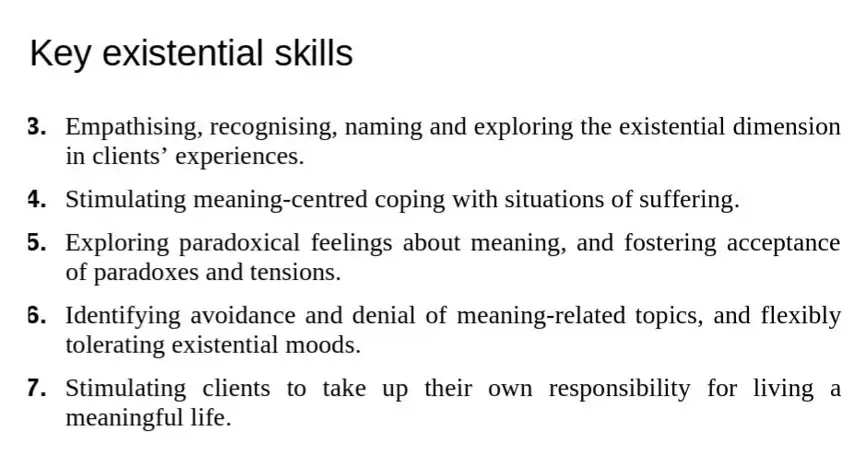
5a) Recognising, naming, and exploring the existential dimension in the clients’ experiences
5b) Stimulating meaning-centred coping with situations of suffering
5c) Exploring paradoxical feelings about meaning, and fostering acceptance
5d) Identifying avoidance and denial of existential topics, and flexibly tolerating existential moods
5e) Stimulating clients to take up their responsibility for living a meaningful life:
6) School-specific existential competences
7) Meta-competences
7a) Tailoring the therapy aims and methods to the client’s needs, skills, and wishes
7b) Therapeutic flexibility
7c) Meta-communication and shared decision-making
7d) Capacity to adapt interventions in response to client feedback
7e) Capacity to use clinical judgment when implementing treatment models
7f) Self-reflection and reflexivity
What are key aspects in helping clients find meaning in life?
Selection from "Meaning in Life: An Evidence-based Guide for Practitioners"
The following texts are selected from the book 'Meaning in life', based on systematic reviews of empirical research by Dr Joel Vos
Winner of the first international leadership award for Distinguished Contributions to Existential Therapy Research
Systematic Meaning in Life Psychotherapy
Systematic Meaning in life Psychotherapy (SMP) helps individuals live a meaningful and satisfying life despite life’s challenges.
Development of Systematic Meaning in Life Psychotherapy
SMP is a "common denominator" intervention, as it is based on evidence-based interventions from all other published meaning-centered therapies. This treatment is based on the following systematic literature reviews and meta-analyses:
Review of philosophical foundations: Vos systematically reviewed the philosophical foundations of meaning in life and working with meaning in life (described in Vos' book Meaning in Life: An evidence-based guide for practitioners, and expanded in various other publications)
Review of meaning and purpose in life: Vos systematically reviewed all research on the conceptualisation of meaning in life, as can be seen on the 'LEARN MORE' page on 'Meaning And Purpose' (see also Vos' 2016 book chapters).
Review of existential concerns: Vos systematically reviewed the empirical foundation of why individuals may ask existential questions (see previous section on the evidence-based conceptual Existential Therapy Framework)
Review of clinical trials: Vos systematically reviewed the effectiveness, and effective therapeutic components, of existential and meaning-centered therapies (see publications together with Vitali, and with Craig and Cooper)
Review of common components: Vos systematically reviewed the common components in meaning-centered therapies, and examined their empirical evidence (described in Vos' book Meaning in Life: An evidence-based guide for practitioners, and expanded in various other publications)
Development of Systematic Meaning-Centered Psychotherapy (SMP): Based on these studies, Vos developed a SMP treatment manual which included all evidence-based components of meaning-centered interventions. This treatment is called ‘systematic’ for three reasons, First, this treatment manual is based on the systematic reviews of the research field, and it includes the evidence-based components that have been found in these systematic studies. Second, these components are also used systematically in the treatment; for example, clients systematically examine each ofthe six types and 29 sub-types of meaning, and they are explicitly invited to exploretheir approach to meaning and try-out a more critical-intuitive approach. Third, therapists are systematically trained in all relevant assessment, meaning-centered, relational, experiental-phenomenological and existential competencies. This treatment manual has been included in Vos' book Meaning in Life: An evidence-based handbook for practitioners (2017), and a systematic training for therapists has been developed and delivered to approx. 3000 therapists worldwide.
Validation of SMP in clinical trials: Vos conducted several randcomized clinical trials, including in cancer patients, showing positive outcomes on meaning in life, mental health (e.g., less anxiety, depression, stress), physical health (e.g., immune system functioning), and general well-being (e.g., happinness, life satisfaction, relationships). (See Vos' 2025 research article).
Key skills in Systematic Meaning in Life Psychotherapy
Therapists may want to use meaning-centered assessment tools
Examples:
• General search and presence of overall meaning: Meaning in Life Questionnaire (Steger)
• What people envision and realise as meaningful in life: Meaning Sextet Questionnaire (you can download this from the 'LEARN MORE' page on meaning and purpose)
• How people learn, make, or intuit meaning in life: Meaning Approach Scale (you can download this from the 'LEARN MORE' page on meaning and purpose)
• General existential well-being & concerns: Life Satisfaction Test; Ryff’s Conceptual Well-Being Scale; Existential Anxiety Questionnaire; Ultimate Concerns Scale
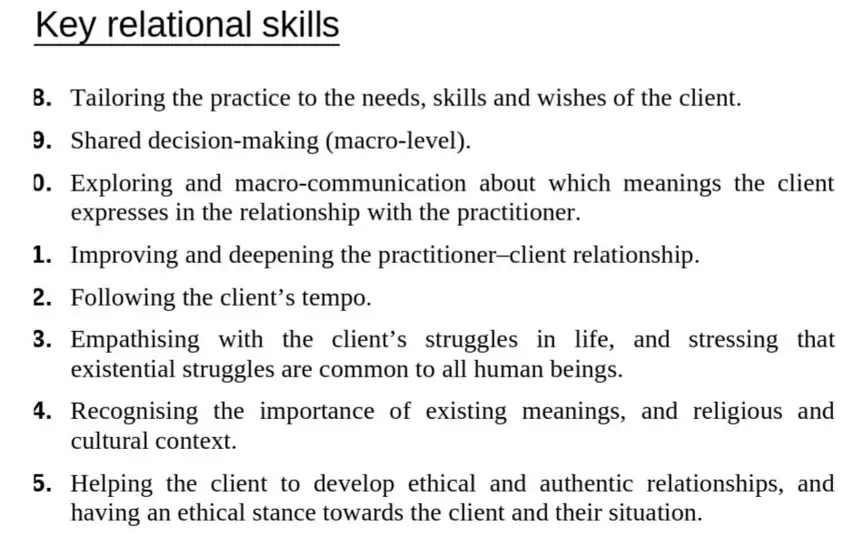
Relational competencies
Relational competencies are at the heart of meaning-centered therapy and practice.
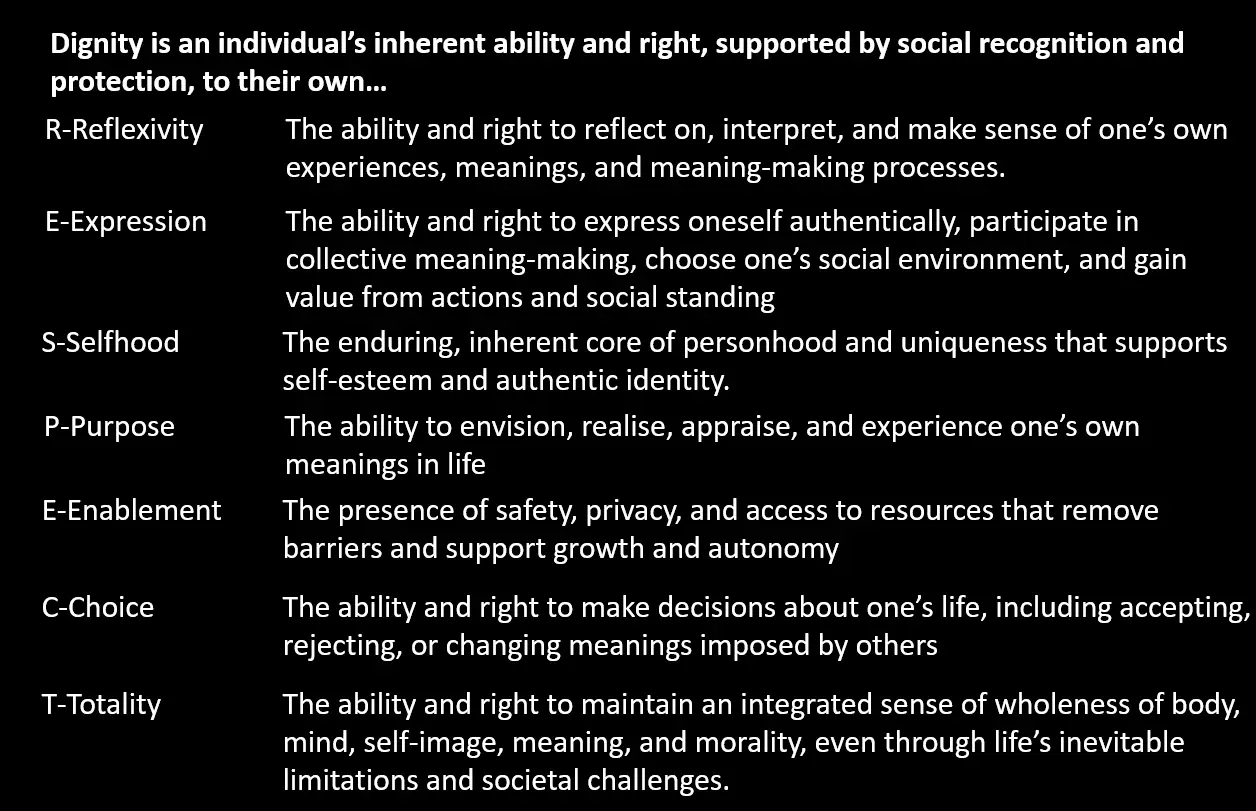
Meaning-centered therapy and practice are grounded in dignity, which means treating others and oneself with dignity, according to the acronym 'RESPECT' (see also the 'LEARN MORE' page on Extremism).
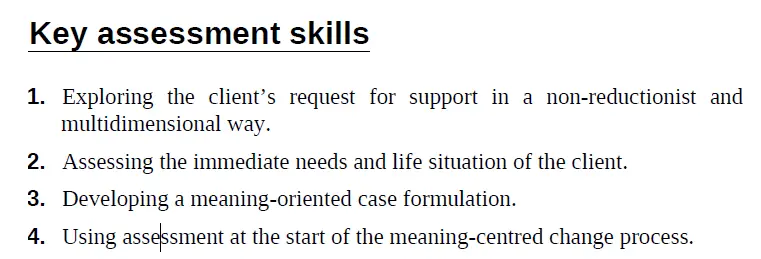
Assessment competencies
Meaning-centred therapists and helping professional should start with a comprehensive assessment of the client.
The meaning-centered case formulation may include the following components:
1.Field specific required information (e.g. DSM diagnosis)
2.Phenomenological description (stay close to words of the client)
3.Systematic assessment of the client’s meaning-centered concerns (MOSAIC Framework)
•General sense of life meaningfulness / satisfaction
•Approach to meaning
•Number of examples of meaning
•Types of meaning
•Discrepancies between envisioned and realised meanings (unrealised meanings)
•Client’s appraisal of threats, resources & meaning-making attempts
•Context: personal, community, society
•Physical, emotional & existential impact
4.Systematic assessment of history of concerns (causes, influences, aetiology)
5.Suitability for this practice/treatment/training/coaching/…
6.Aim: formulated by the client & connected with hypotheses
7.Treatment method and steps: following logically from hypotheses to achieve aim
8.Critical self-reflection & reflexivity of the practitioner
Therapists may want to use meaning-centered assessment tools
Examples:
• General search and presence of overall meaning: Meaning in Life Questionnaire (Steger)
• What people envision and realise as meaningful in life: Meaning Sextet Questionnaire (you can download this from the 'LEARN MORE' page on meaning and purpose)
• How people learn, make, or intuit meaning in life: Meaning Approach Scale (you can download this from the 'LEARN MORE' page on meaning and purpose)
• General existential well-being & concerns: Life Satisfaction Test; Ryff’s Conceptual Well-Being Scale; Existential Anxiety Questionnaire; Ultimate Concerns Scale
Key phenomenological, experiential and mindfulness skills
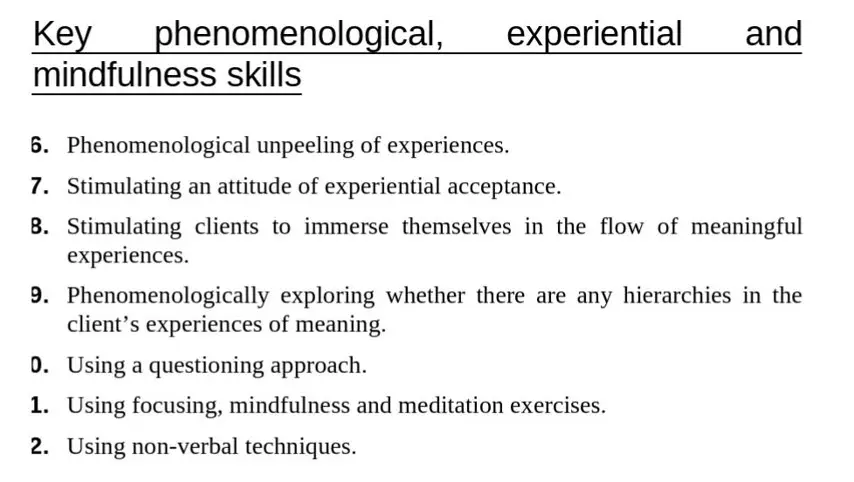
Exercise for therapists & helping professionals to develop their phenomenological skills

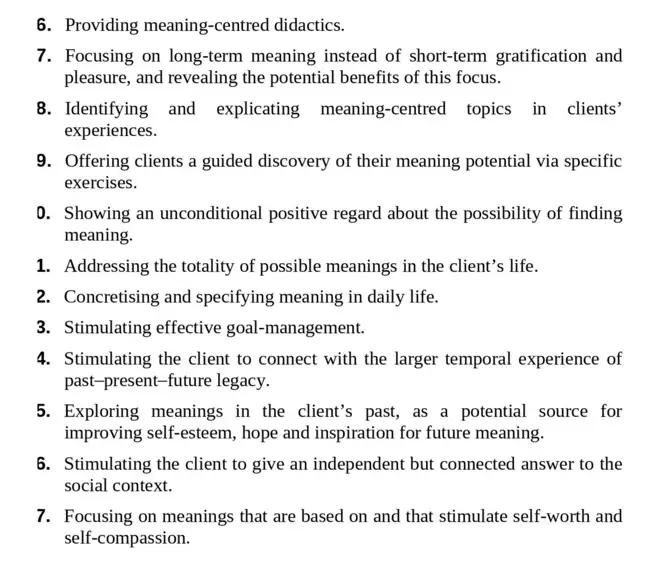
Meaning-specific skills
Existential skills
Structure of Systematic Meaning in Life Psychotherapy
Structure of sessions
Based on systematic literature reviews and meta-analyses from Vos and Vitali in 2019, therapists and other helping professionals are recommend to have a structure that consists of three parts: Introduction & assessment; Systematically exploring the six types of meaning with the help of a critical-intuitive approach; Applying in daily life. For example, Vos included a ten-session treatment manual in his handbook on meaning in life for practitioners:
1. Introduction: what is meaning and why could this be relevant?
2. Assessment of meaning: how do we experience meaning, and how has this changed?
3. Resilience as meaning: how can we cope in a meaningful way with challenges in life and specifically with the disease?
4. Materialistic and hedonistic meanings: how can we experience this as meaningful?
5. Self-oriented meanings: how can we experience this as meaningful?
6. Social meanings: how can we experience this as meaningful?
7. Large meanings: how can we experience this as meaningful?
8. Being-here as meaning: how can we experience this as meaningful?
9 Doing meaning in daily life: how can apply meaning daily life: how can we set goals, create a plan, make changes, cope with challenges, evaluate and adjust our goals?
10. Ending and starting: what can we use from these sessions in daily life, and how can we continue living a meaningful life?
Structure within a session
Based on systematic literature reviews and meta-analyses from Vos and Vitali in 2019, therapists and other helping professionals are recommend to use a structure within sessions that follow an introduction & welcome, theory/didactics/psycho-education, exploration and expression of experiences, conclusions and decisions, preview and homework for the next session.
A. Introduction & welcome: aim and agenda for today, looking back at last week’s session
B. Emotional check-in: exploring any important developments since the last session, and re-connecting with each other
C. Didactics & group discussion: explanation of theory, usually interactive with examples from the group
D. Guided experiential exercise: an experiential or mindfulness exercise is used to help focus on inner experiences instead of merely theoretically speaking about meaning
E. Guided self-reflective exercise: the experiential exercise flows automatically into an exercise in which the clients are asked to reflect on some questions related to the didactics of the day (e.g. ‘Find examples of moments in the past, present, of possible future that feel particularly meaningful.’)
F. Self-expression: clients are invited to share their experiences
G. Self-evaluation: clients are invited to evaluate in an individual exercise followed by a group discussion what was the most meaningful aspect of today, and decide on possible changes in daily life
H. Session evaluation: clients are invited to evaluate today’s session and write down ‘the three most important messages of today’
I. Ending: preview of next session and homework
References:
See reference list below on this page & on the 'Meaning And Purpose' page.
The best resource is Vos' handbook for practitioners, that offers clear guidance on how to develop meaning-centered competencies for psychotherapists and other helping professionals. This book also includes the ten session treatment manual.
How can transactional analysis professionals help clients?
The following texts are selected, based on systematic reviews and clinical trials by Dr Joel Vos
Winner of the 2026 International Transactional Analysis Association Research Award
Research line on Transactional Analysis Psychotherapy
Transactional Analysis Psychotherapy (TAP) was developed by Eric Berne in the 1950s, integrating and extending ideas from various psychotherapeutic schools. Since the invent, there have been about 50.000 publications on TAP, but there were no systematic reviews and clinical trials with semi-structured treatment manuals.Therefore, Joel Vos conducted an awarded series of reviews and clinical trials on Transactional Analysis Psychotherapy, together with his colleague Dr Biljana van Rijn. This research was conducted at the Metanoia Institute in London (UK), financially supported by grants from the European Association of Transactional Analysis (EATA). This research line consisted of multiple studies building on each other.
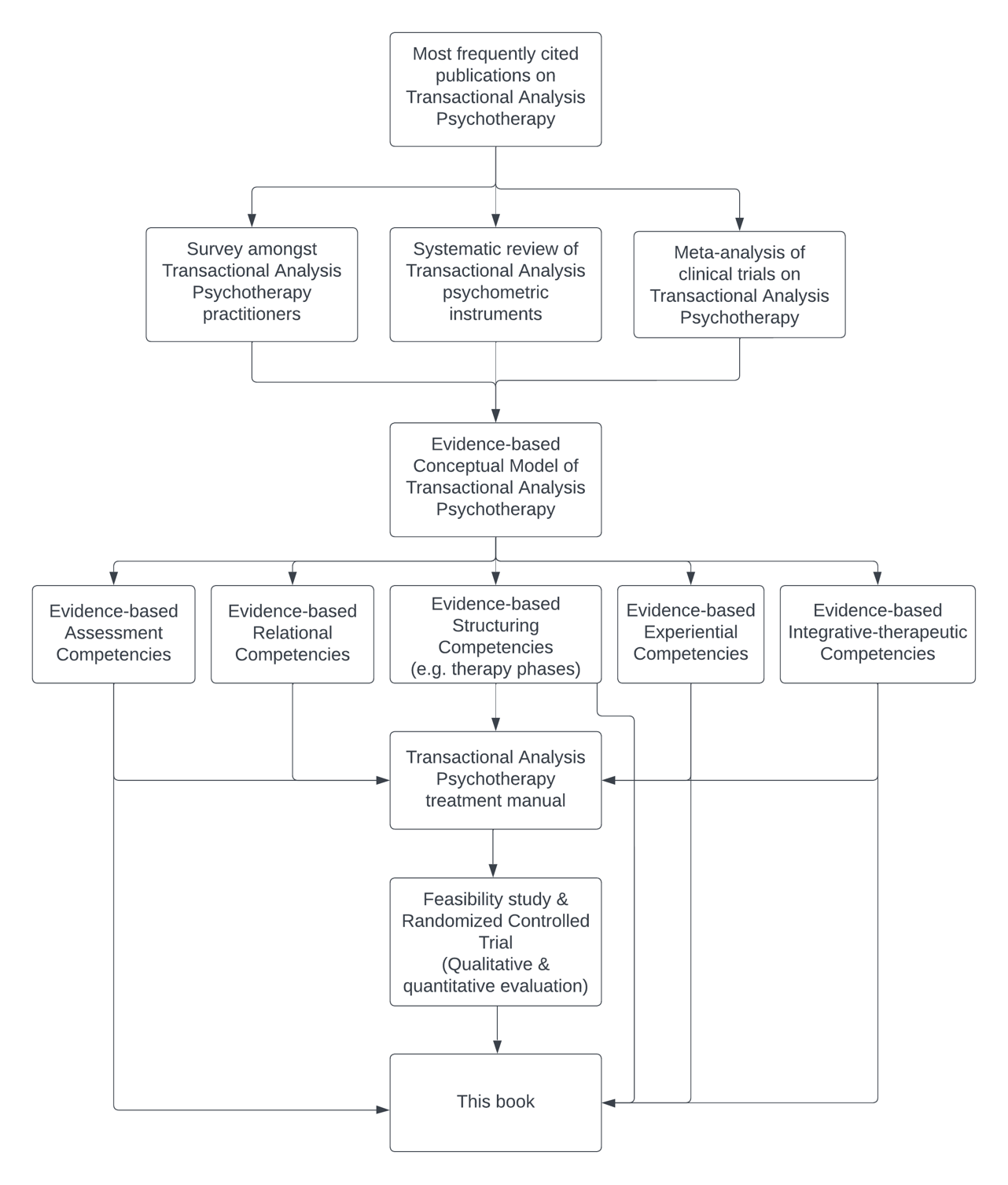
Simple evidence-based conceptual model of Transactional Analysis

Complete evidence-based conceptual model of Transactional Analysis
Transactional Analysis Goal Attainment Form
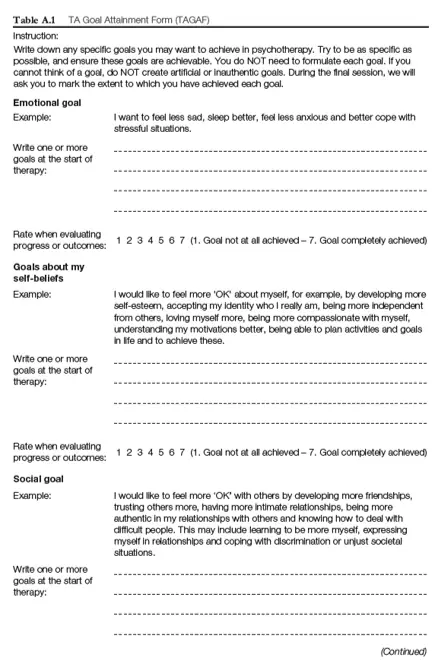
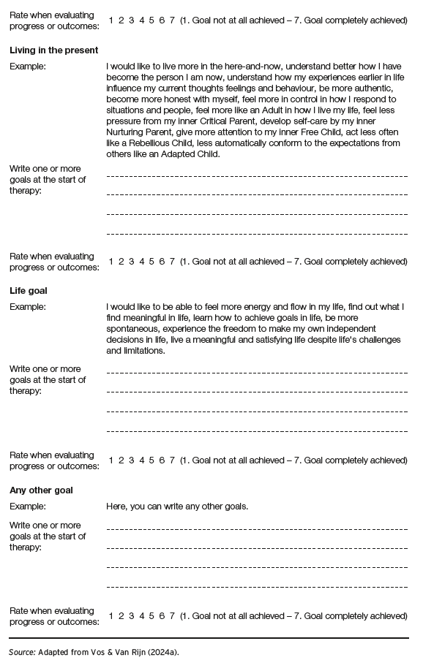
Recommendation for a Transactional Analysis Case Formulation
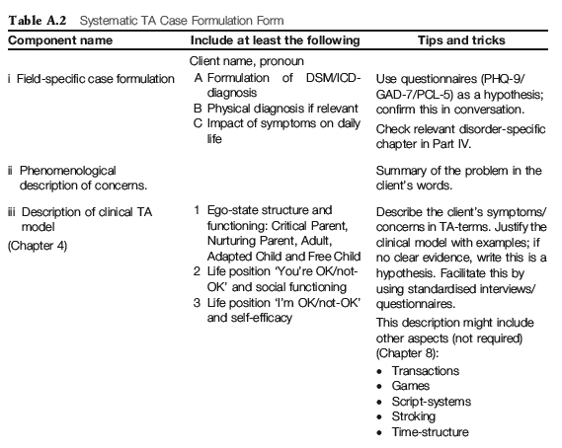
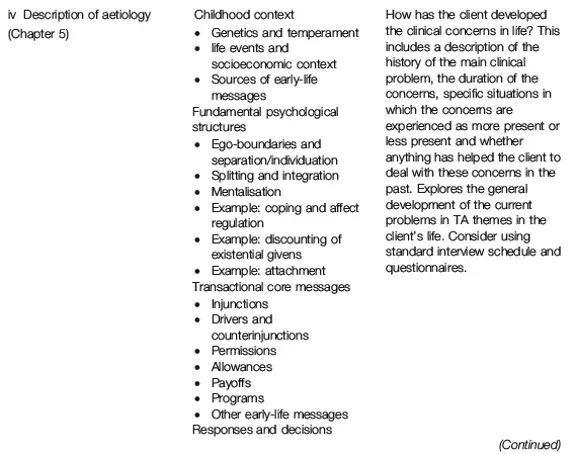
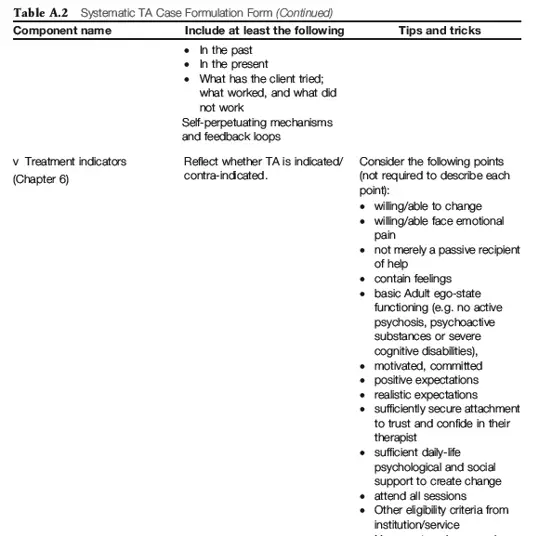
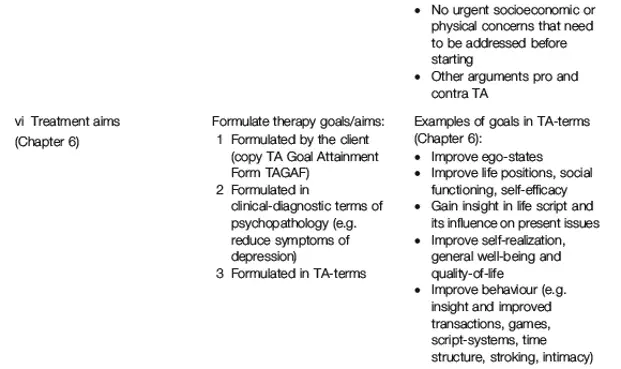
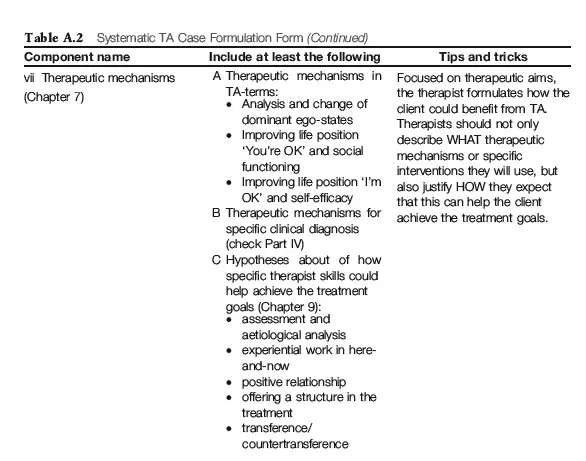
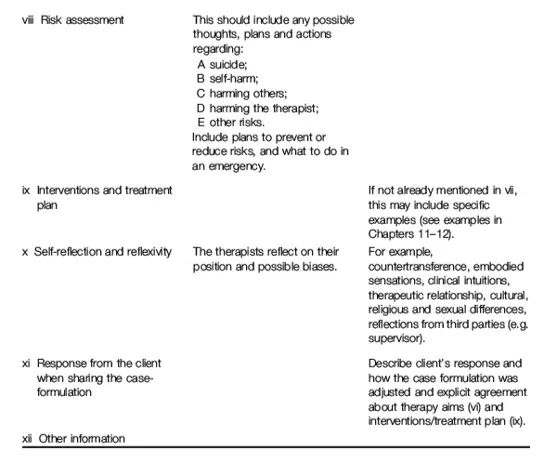
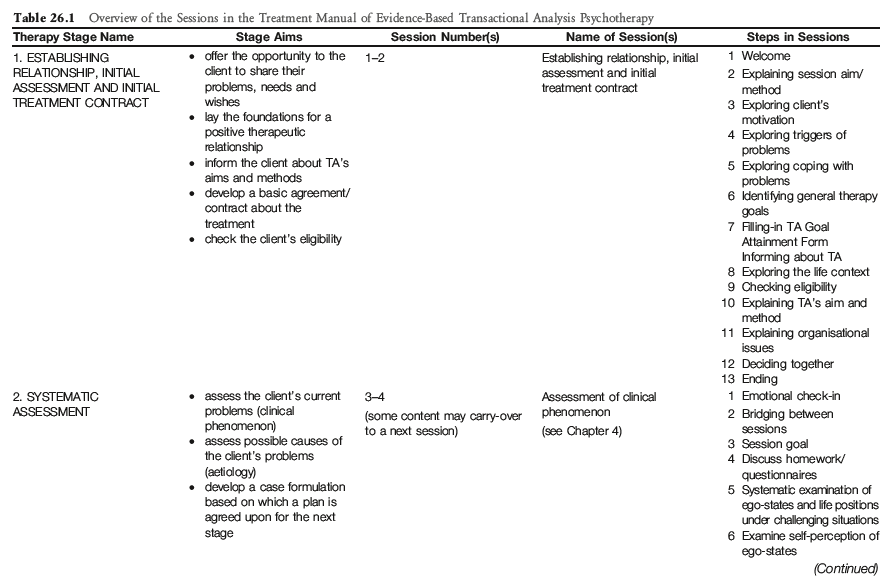
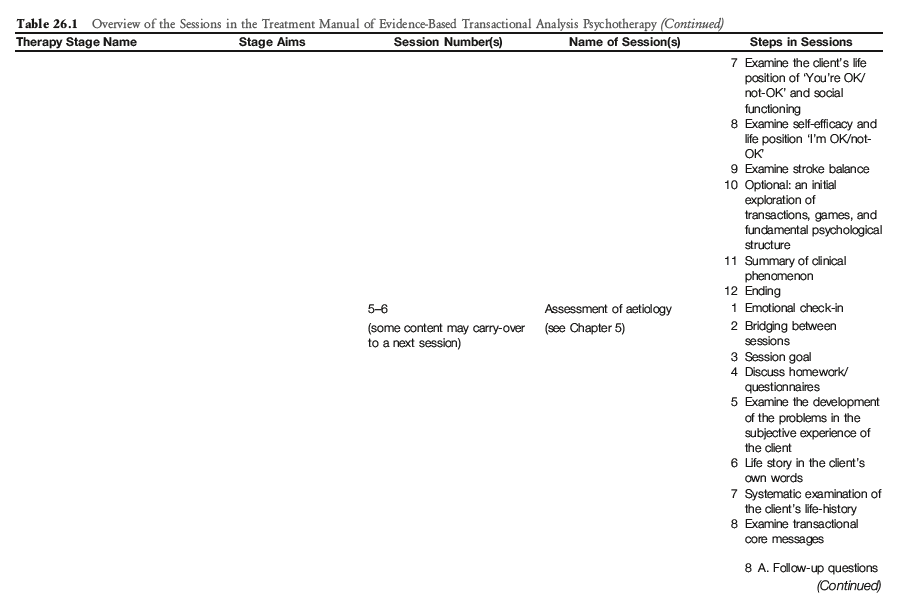
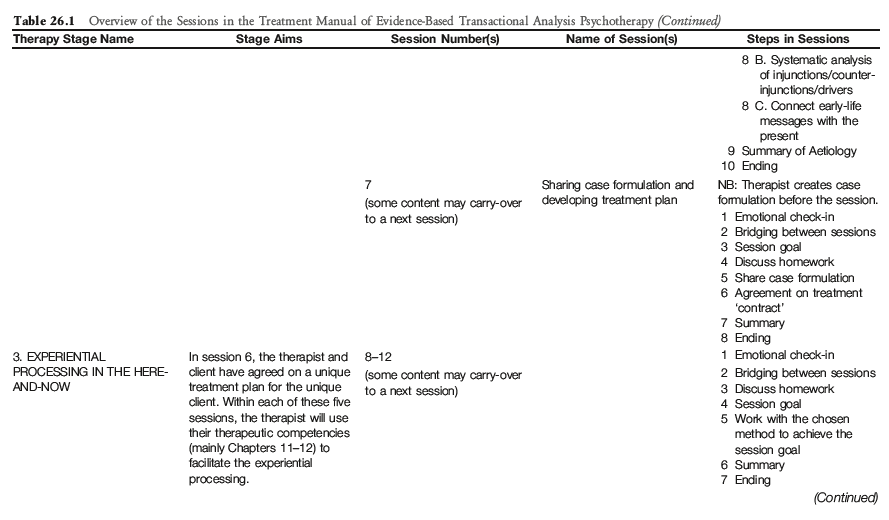
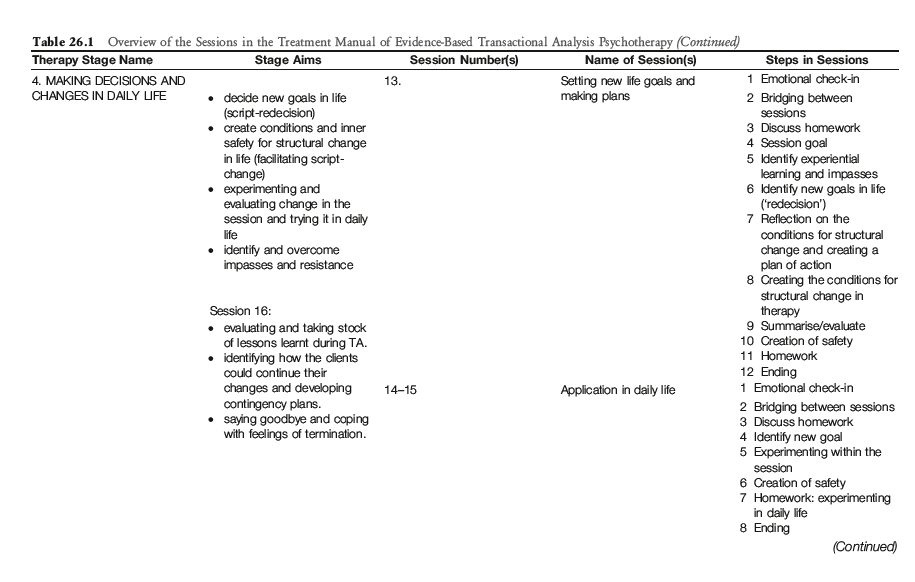
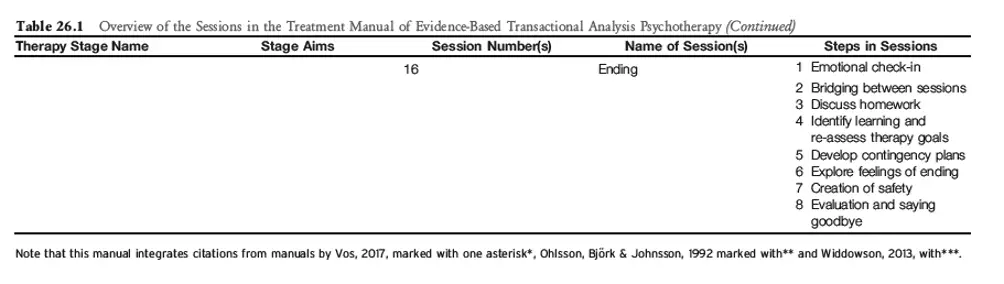
Overview of 16-session Transactional Analysis Psychotherapy
Outcomes of Transactional Analysis Psychotherapy
We conducted a systematic literature review and meta-analysis on 41 clinical trials on Transactional Analysis Psychotherapy:.
Overall effects: The 41 clinical trials of TA treatments had moderate to large effects on psychopathology (Hedges’s g = .66), social functioning (g = .62), self-efficacy (g = .80), ego-state functioning (g = .69), well-being (g = .33), and behavior (g = .56).
Compared with control conditions: TA had moderate to large effects on psychopathology (g = .61), social functioning (g = .69), self-efficacy (g = .88), ego-states (g = .70), well-being (g = .85), and behavior (g = .46).
Differences between samples: TA was more effective on most outcomes in individuals, groups, and families than in schools or prisons.
What predicted outcomes: Psychopathology changes were significantly predicted by improvements in ego-states, self-efficacy, social functioning, and client–practitioner relationship (r² range= .27–.43). Treatments were more effective if they included systematic assessment, treatment stages, psycho-education, TA-unique techniques, and an experiential focus (r² range = .03–.31).
Conclusion: TA may be considered a bona fide, effective treatment for many clients, comparable with other bona fide types of psychological therapies. TA practitioners are recommended to focus on improving ego-states, self-efficacy, social functioning, and develop a constructive client–practitioner relationship. TA practitioners may want to include a systematic assessment, treatment stages, psycho-education, TA-unique techniques, and an experiential focus.
Next steps: We used the findings of this review and meta-analysis to develop a 16-session TA treatment manual for clients with depression, as well as TA therapist training. This manual included the aformentioned evidence-based aspacts of TA. We tested this treatment manual in a feasibility study in 9 clients, and confirmed this in a block-randomized clinical trial in 25 clients. The treatment manual and the TA therapist training are integrated in our Handbook of Transactional Analysis Psychotherapy: An evidence-based approach (Sage, 2025).
References:
See reference list below on this page. The best resource is Vos' and Van Rijn's handbook for practitioners.This book also includes a 16 session treatment manual.
Where can we find videos, lectures, and podcasts to learn more?




What are Joel Vos’ main books on psychotherapy & helping professions?